PEACE Newsletter #10: Moving towards the 50 kW high-pressure demonstrator
Published: August 20, 2026
The 10th edition of the PEACE project newsletter is now available, bringing the latest project developments, technical achievements and news from the European hydrogen sector.
As the PEACE project enters its final implementation phase, the consortium is making important progress towards the demonstration of its innovative high-pressure alkaline electrolysis technology. A key milestone is the ongoing assembly of the 50 kW high-pressure alkaline electrolysis demonstrator, building on pressurised cell testing and short-stack development.
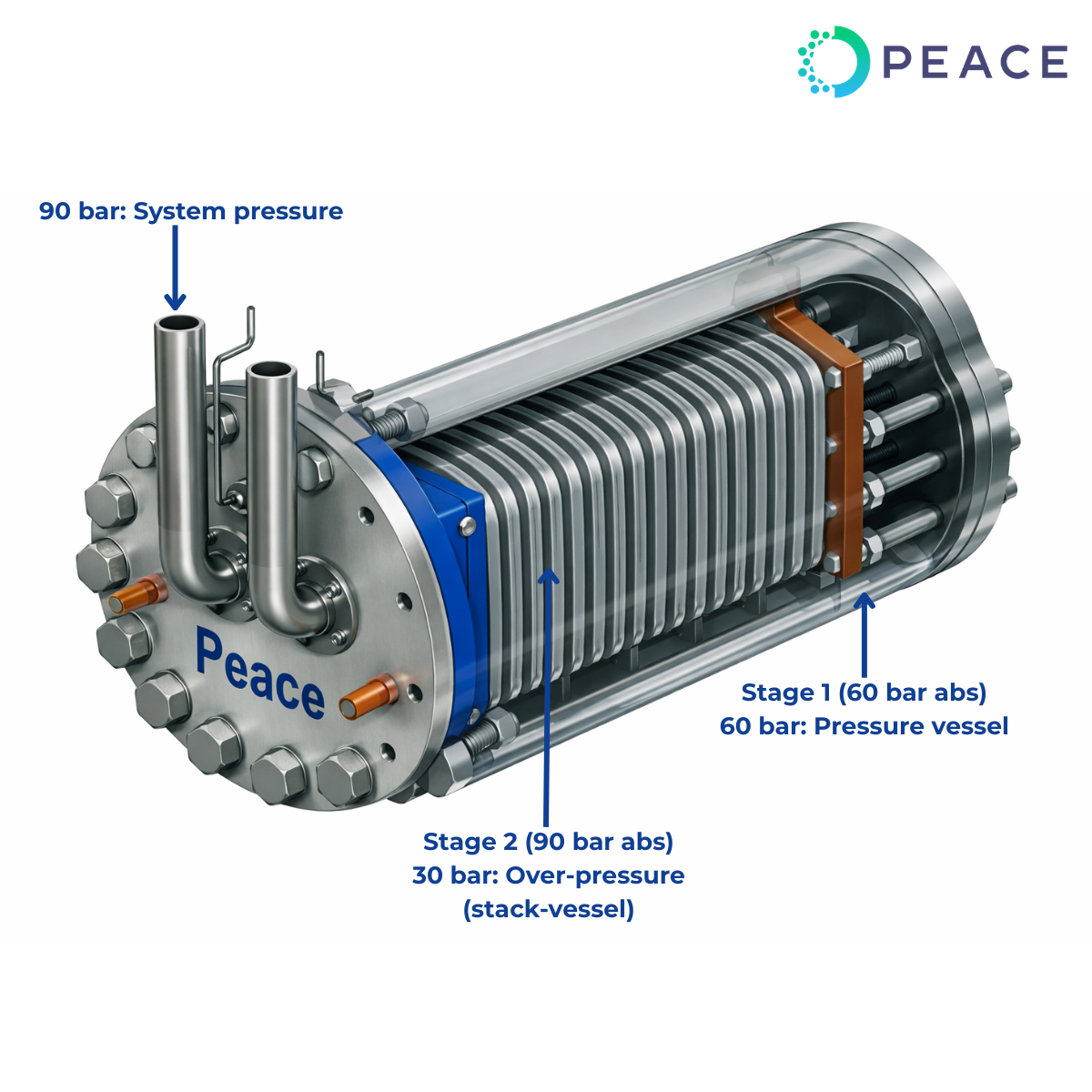
PEACE high-pressure AEL system
Source: PEACE project (CC-BY-NC-ND 4.0)
In this issue, we highlight the latest progress towards the demonstrator, including improvements to the stack design and the preparations for CE marking under the Pressure Equipment Directive. We also look at how the PEACE technology could support industrial hydrogen applications such as methanol and ammonia production and hydrogen refuelling, by reducing the need for downstream hydrogen compression.
The newsletter also features the PEACE project’s participation in FDFC 2026 in Montpellier, where researchers presented new insights into bubble behaviour in alkaline water electrolysis and its implications for electrolyser optimisation.
Beyond the project’s technical activities, PEACE Newsletter #10 provides news from the European hydrogen landscape, including the third European Hydrogen Bank auction and new initiatives addressing sustainability and circularity in the hydrogen sector.
Finally, readers can find a selection of upcoming hydrogen-related events and funding opportunities, offering opportunities to connect with the wider research, industrial and policy community.
Read the full newsletter no. 10 HERE and subscribe to stay updated on future developments.
The project is supported by
the Clean Hydrogen Partnership and its members.
Co-funded by the European Union. Views and opinions expressed are however those of the author(s) only and do not necessarily reflect those of the European Union or Clean Hydrogen Partnership. Neither the European Union nor the granting authority can be held responsible for them.