PEACE Workshop: Key Results Presented at Hydrogen Days 2026
Published: March 24, 2026
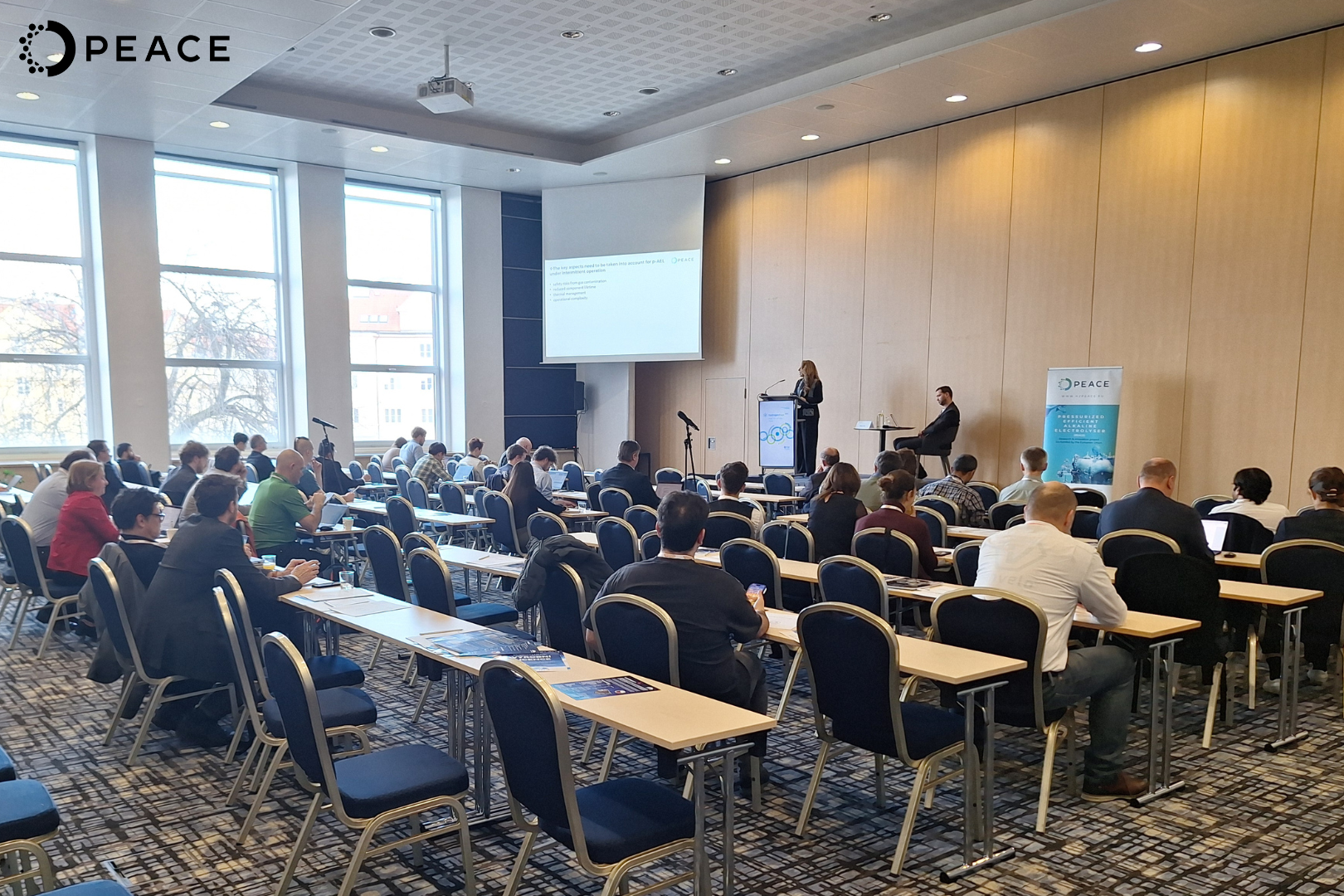
The PEACE project participated in Hydrogen Days 2026, one of Central Europe’s leading hydrogen events, held in Prague. During the conference, the project organised a dedicated workshop to present its latest progress and scientific results to researchers, industry representatives, and stakeholders in the hydrogen sector.
Project Overview
The workshop highlighted recent advances in highly pressurised alkaline electrolysis (AEL) technology developed within PEACE. The project coordinator, Dr. Fatemeh Razmjooei, German Aerospace Center (DLR), introduced the project’s objectives:
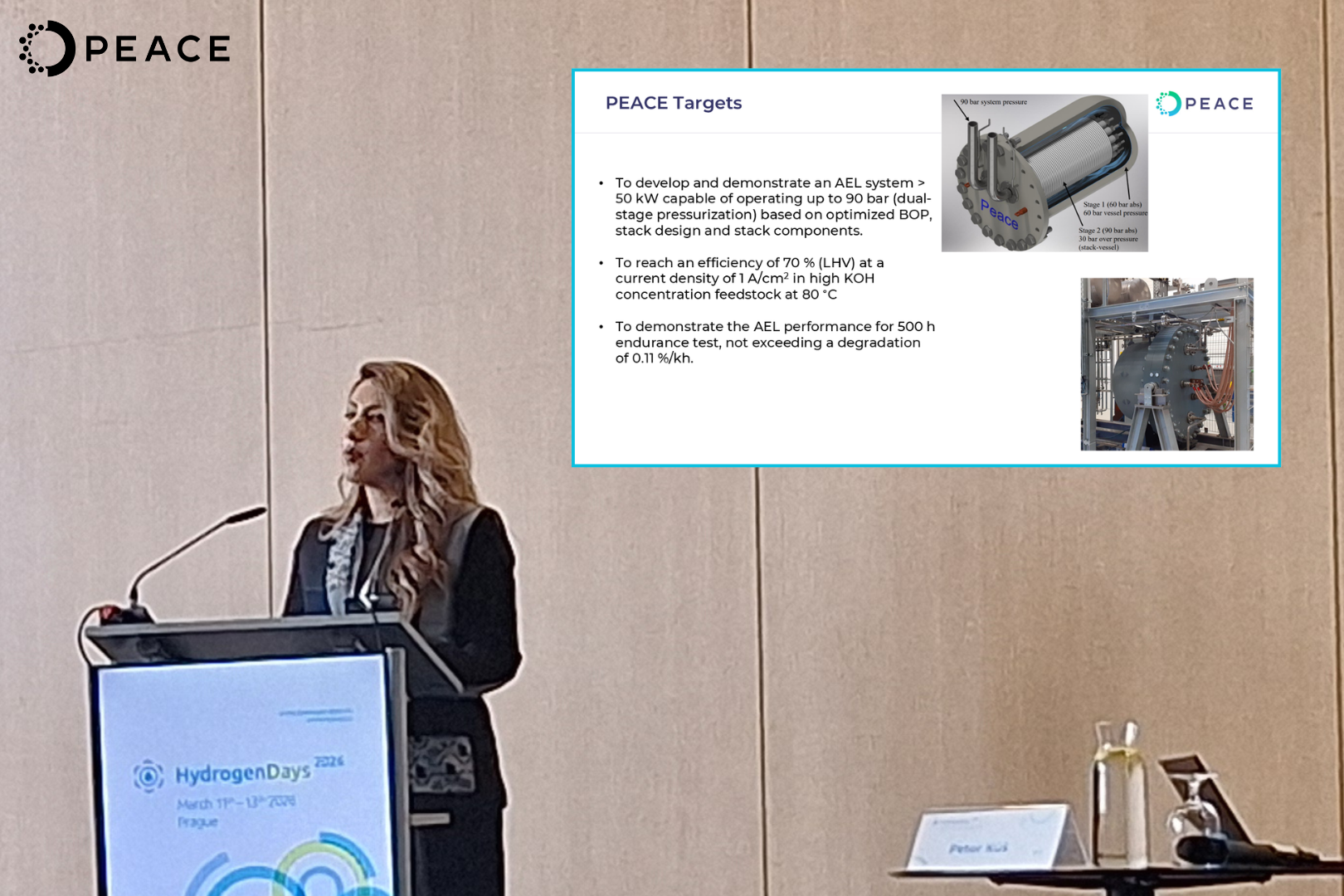
- Develop and demonstrate an AEL system exceeding 50 kW, capable of operating at pressures up to 90 bar using a dual-stage pressurisation concept, supported by optimised balance-of-plant (BoP), stack design, and stack and system components.
- Achieve an efficiency of 70% (LHV) at 1 A/cm² using high-concentration KOH feedstock at 80 °C, while ensuring long-term stability.
- Demonstrate system durability through a 500-hour endurance test, with degradation not exceeding 0.11 %/kh.
A summary of the key results presented at the workshop follows.
1. Promising Results at Cell Level
Electrochemical testing at the cell level demonstrated a best performance of 1.8 V at 1 A/cm² , an important step towards the project’s efficiency targets.
Dirk Ullmer (DLR) presented collaborative work with Eindhoven University of Technology (TU/e), highlighting:
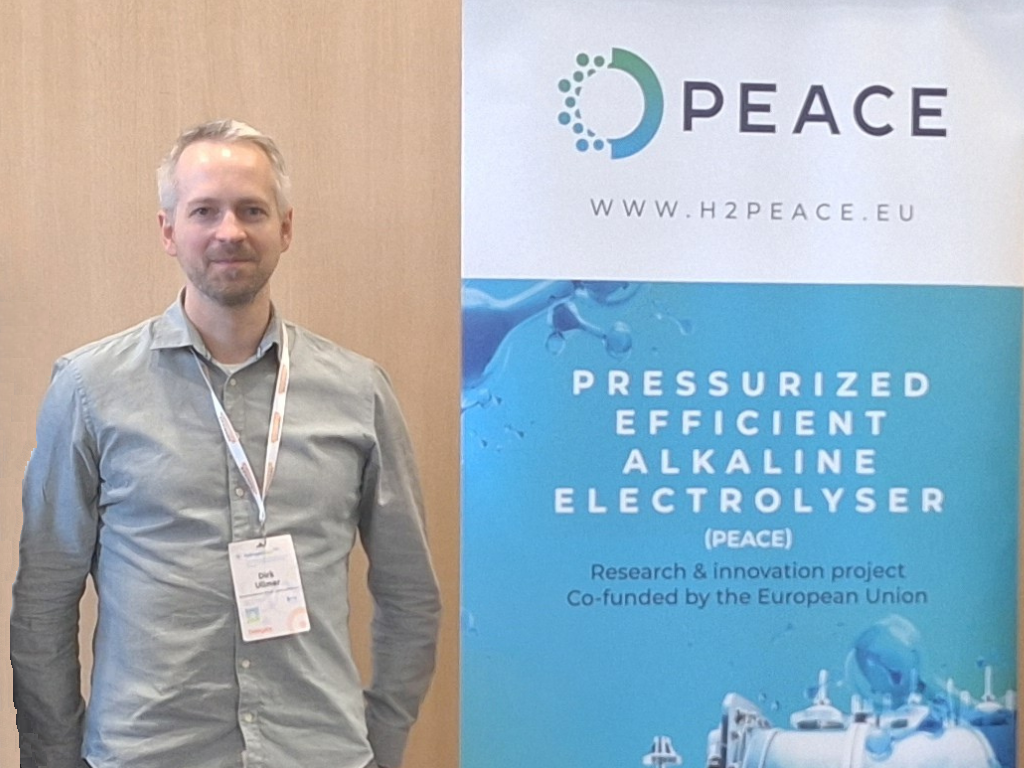
- Evaluation of different cells under ambient and pressurized conditions reaching to performance of lower than 1.8 V at 1 A/cm²
- Negligible degradation under harsh and demanding conditions was observed.
These insights inform the selection of optimal electrode configurations for future stack design.
2. Separator Performance Evaluation
Various separator materials were tested for electrochemical performance. All showed cell voltages below 1.8 V at 1 A/cm², but gas separation capability is also critical for pressurised AEL systems.
Zirfon 500 was identified as the best-performing material and will be used for scale-up.
3. Validation at Larger Cell and Stack Level
Validation was extended to 100 cm² cells within a three-cell DLR stack under pressurised conditions:
- Achieved cell voltage < 1.8 V at 1 A/cm²
- Negligible degradation was observed over long-term operation.
These results indicate that the system design can meet performance targets at larger scales.
4. Bubble Dynamics
Saksham Pandey (TU/e) presented high-resolution videos showing bubble behaviour in alkaline water electrolysis:
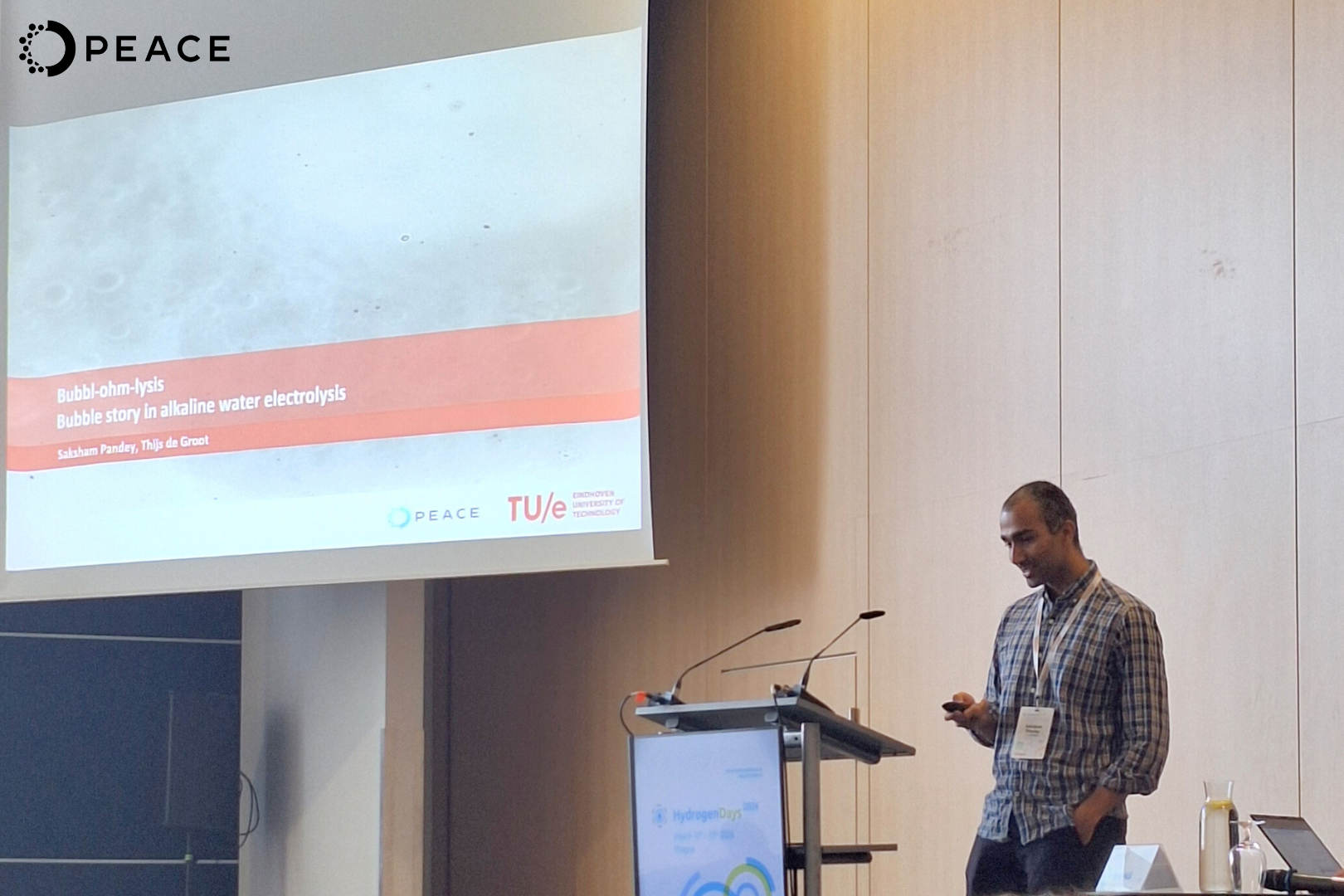
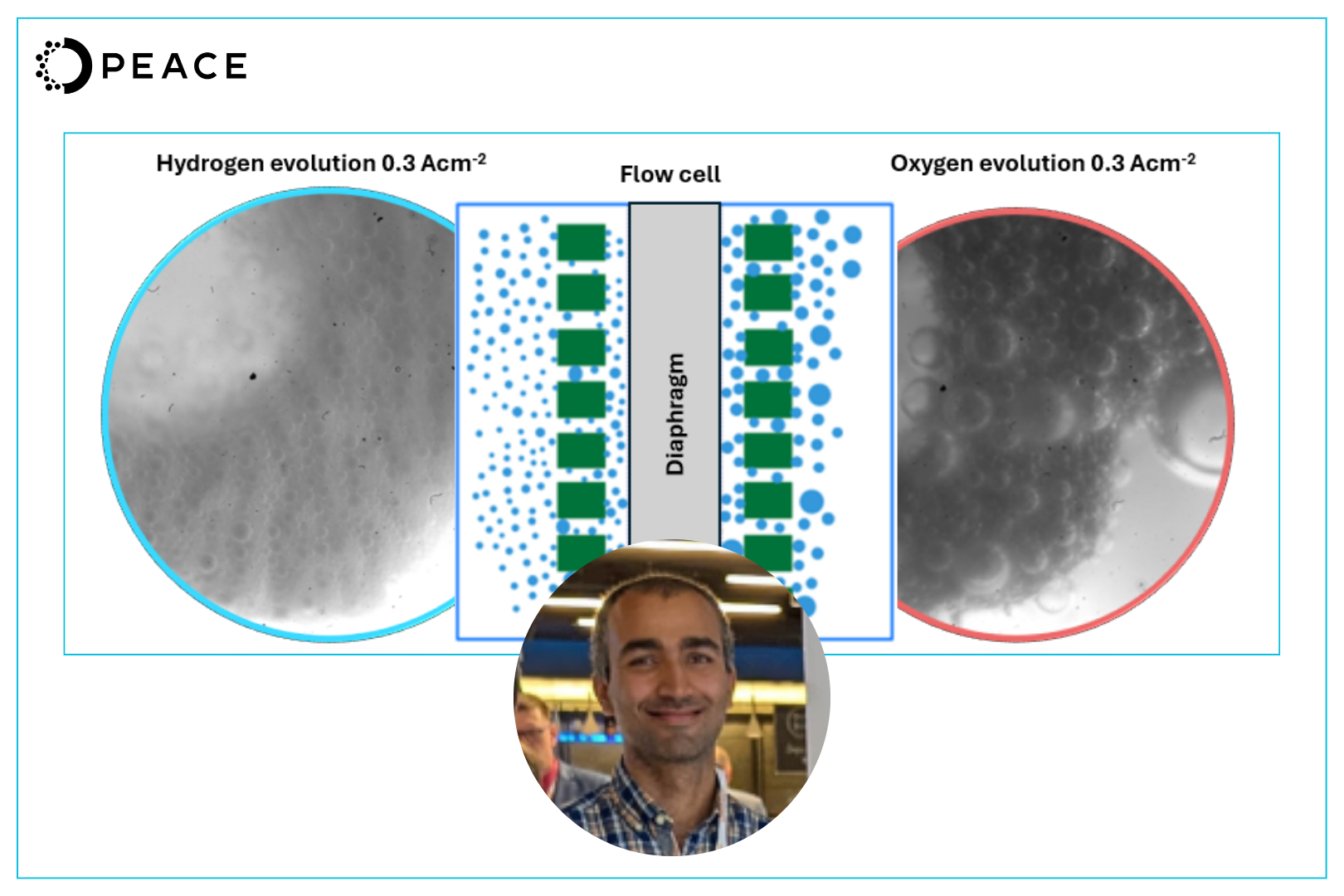
- Micron scale visualization in an alkaline flow cell at high current densities
- Oxygen and hydrogen bubbles differ in size and dynamics: oxygen bubbles tend to stick, while smaller hydrogen bubbles glide on the electrode surface.
- Polarity and voltage switch experimentssuggest solutal Marangoni forces govern bubble dynamics
These insights support optimisation of electrode design and operational parameters.
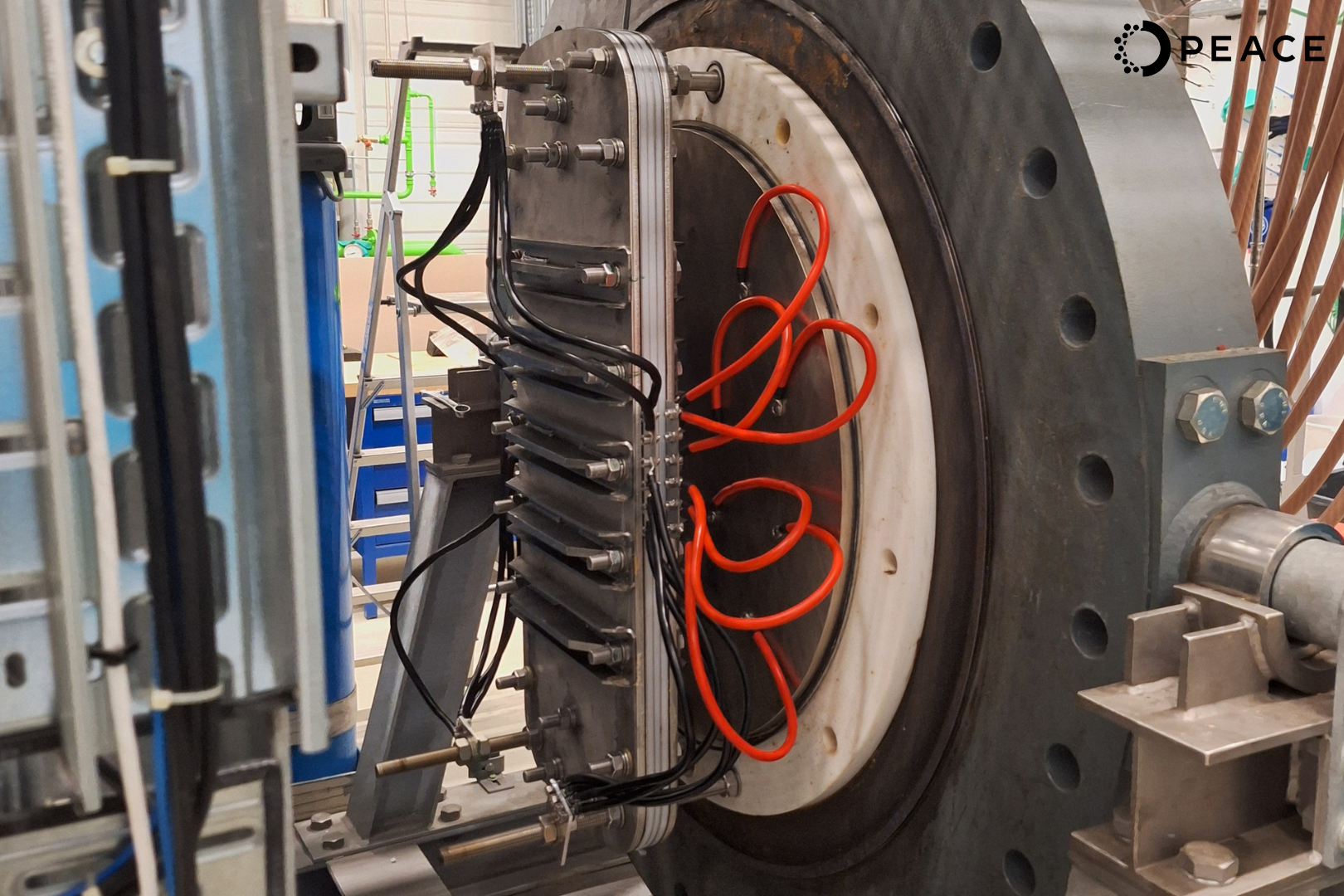
5. PEACE Short-Stack
Paolo Lupotto (Materials Mates Italia) discussed the construction of the three-cell short stack (1750 cm²):
- Short stack was developed by integrating final stack components.
- Compatible with Brandenburg University of Technology test infrastructure for dual-stage pressurisation.
- Emphasis on low-cost, scalable manufacturing, using widely available materials and avoiding complex mechanical processes.
The short stack serves as a model for a 50 kW pressurised AEL demonstrator, to be operational at BTU in 2026 following CE marking and EU PED certification.
6. PEACE Proof-of-Concept Stack
Prof. Lars Röntzsch, Brandenburg University of Technology (BTU), outlined upgrades to the testing site for the PoC stack:
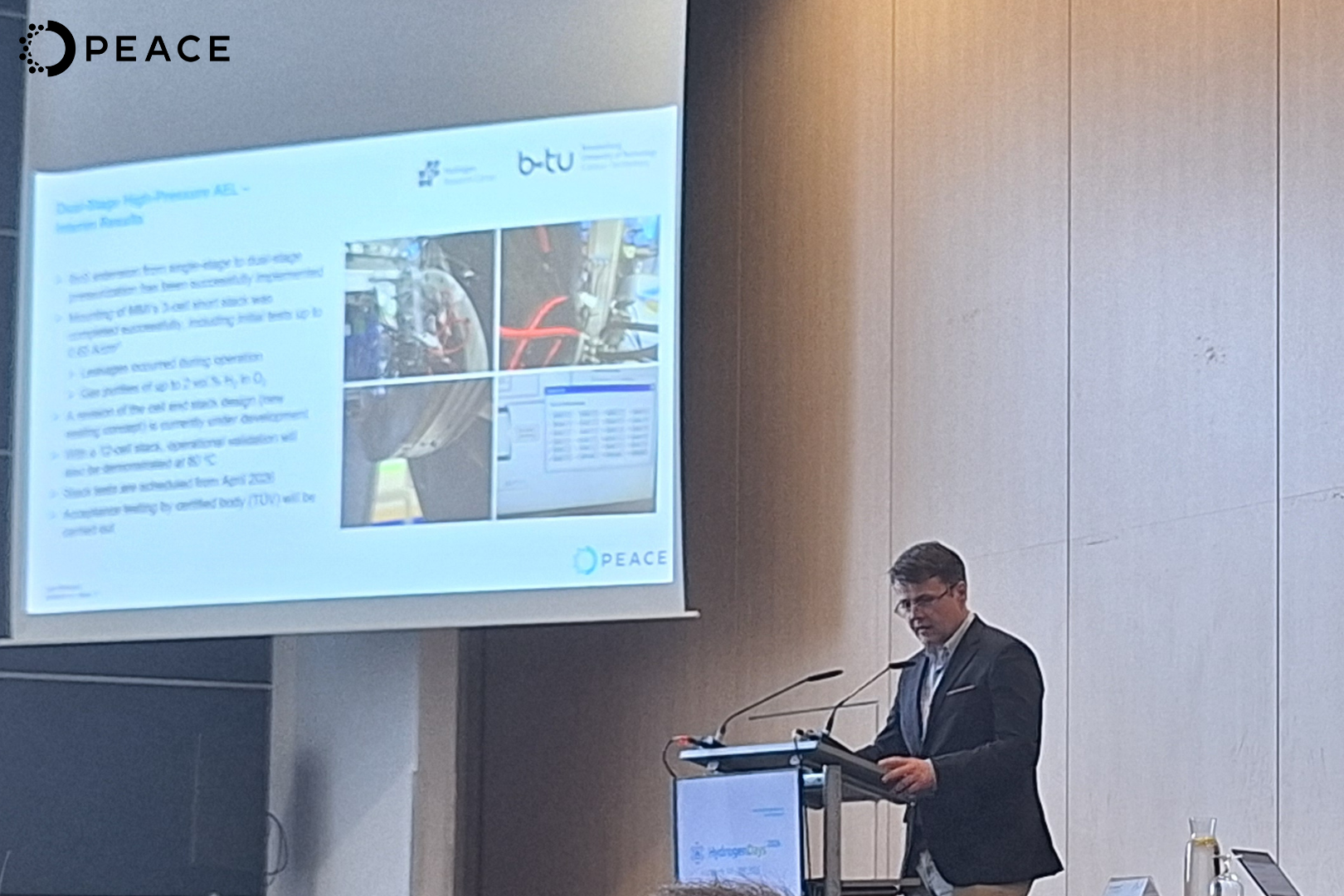
- Balance of Plant (BoP) upgrades to support dual-stage pressurisation.
- Stack operation at internal pressures up to 60–90 bar, with external vessel pressures of 30–60 bar.
- Improvements to piping, sensors, valves, and leak detection ensure safe, reliable operation.
Short-stack installation and testing allowed further refinements before full pressurised operation.
7. Modelling and Operational Optimisation
In parallel, DLR developed a transient simulation model for a single cell, validated against experimental data, as presented by Hans Wiggenhauser (DLR).
- Model helps analyse system behaviour and optimise operational strategies.
- Controlling electrolyte flow emerged as key to maintaining high gas purity and stable operation.
These modelling efforts support the design of improved operational strategies for future system demonstrations at BTU.

8. Conclusion
The PEACE workshop at Hydrogen Days 2026 offered a valuable platform to share results with the hydrogen community and engage with experts from research and industry. Such interactions are crucial for validating technologies, gathering feedback, and strengthening collaboration across Europe’s hydrogen ecosystem.
The PEACE consortium thanks the Hydrogen Days organisers for hosting the workshop and providing an excellent opportunity to showcase the project’s progress.
Photos: PEACE Project (CC-BY-NC-ND 4.0)
Discover more PEACE project results HERE
The project is supported by
the Clean Hydrogen Partnership and its members.
Co-funded by the European Union. Views and opinions expressed are however those of the author(s) only and do not necessarily reflect those of the European Union or Clean Hydrogen Partnership. Neither the European Union nor the granting authority can be held responsible for them.