PEACE Demonstration: 50 kW Electrolysis Stack Assembly Underway
Published: June 23, 2026
The PEACE project has reached another important step on its path towards demonstrating a novel dual-pressure alkaline electrolysis (AEL) system for efficient green hydrogen production.
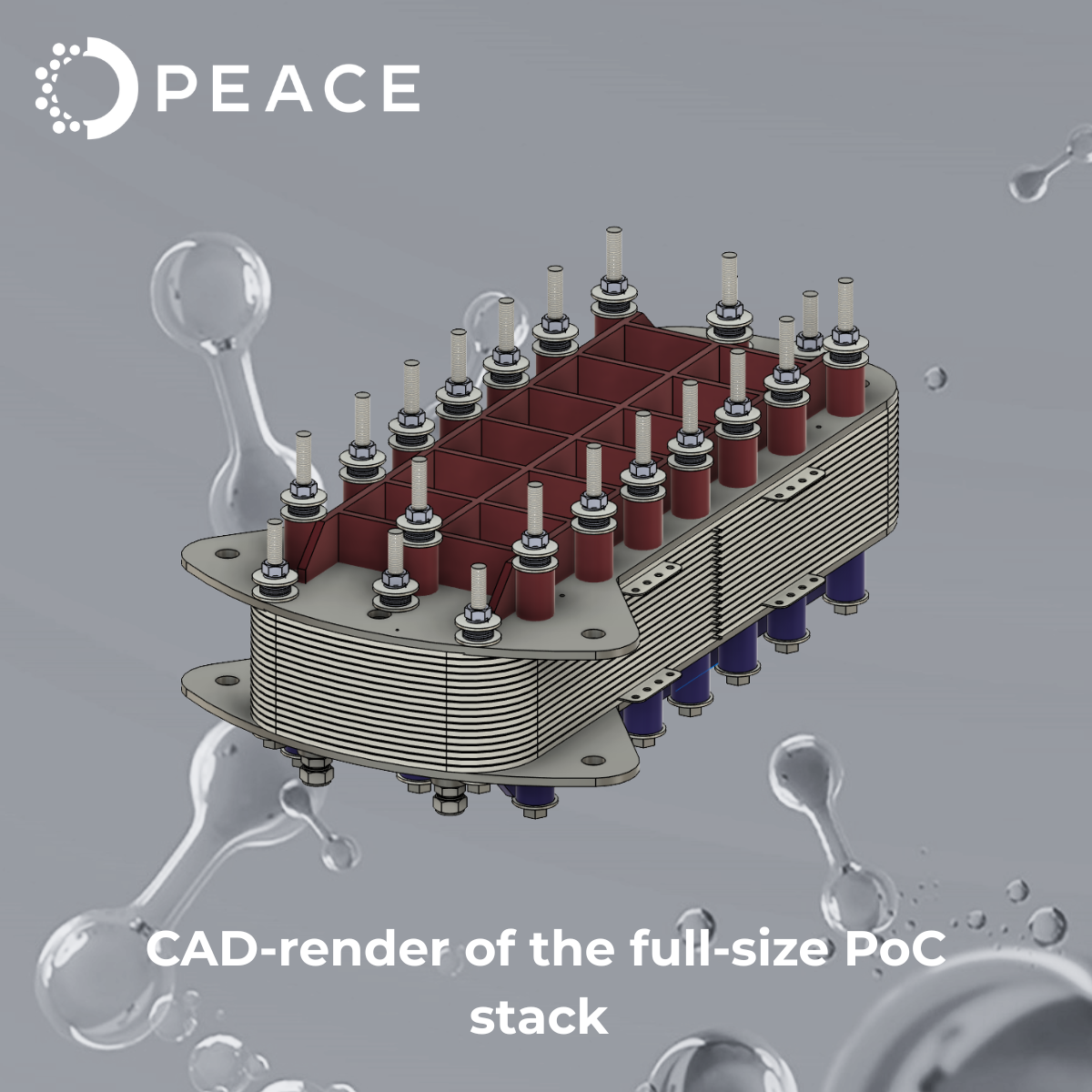
The project team is currently focused on the assembly of the PEACE 50 kW alkaline electrolysis stack, with significant progress achieved by project partner Materials Mates Italia (MMI). This work builds upon the experience gained during the operation and evaluation of the preceding short stack, enabling the consortium to further refine and optimise the system design.
Several key improvements have been incorporated into the stack design, including:
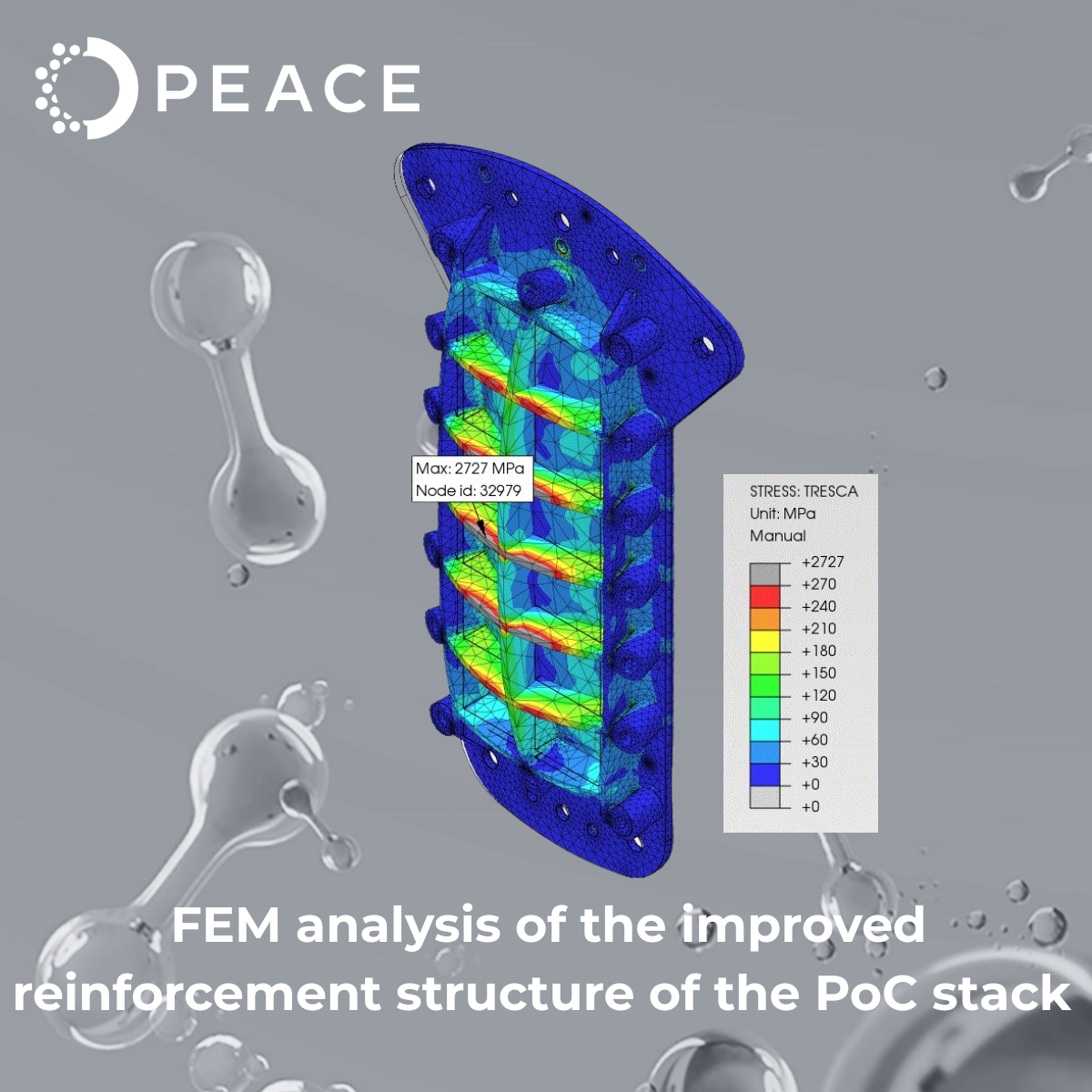
· An enhanced stack composition featuring a newly implemented reinforcement structure (see in the picture below) to improve mechanical stability and operational reliability.
· Further optimisation of the gasketing system to support robust performance under demanding operating conditions.
Alongside the technical development activities, the consortium is also preparing the documentation required to obtain the EU Declaration of Conformity in accordance with the Pressure Equipment Directive (PED 2014/68/EU).
This regulatory step is essential for the next phase of the project. Before the PEACE stack can be integrated into the pressure vessel at the Brandenburg University of Technology Cottbus - Senftenberg (BTU)test site and used in the demonstration of the complete PEACE dual-pressure AEL system, it must obtain CE marking and demonstrate compliance with the applicable safety requirements.
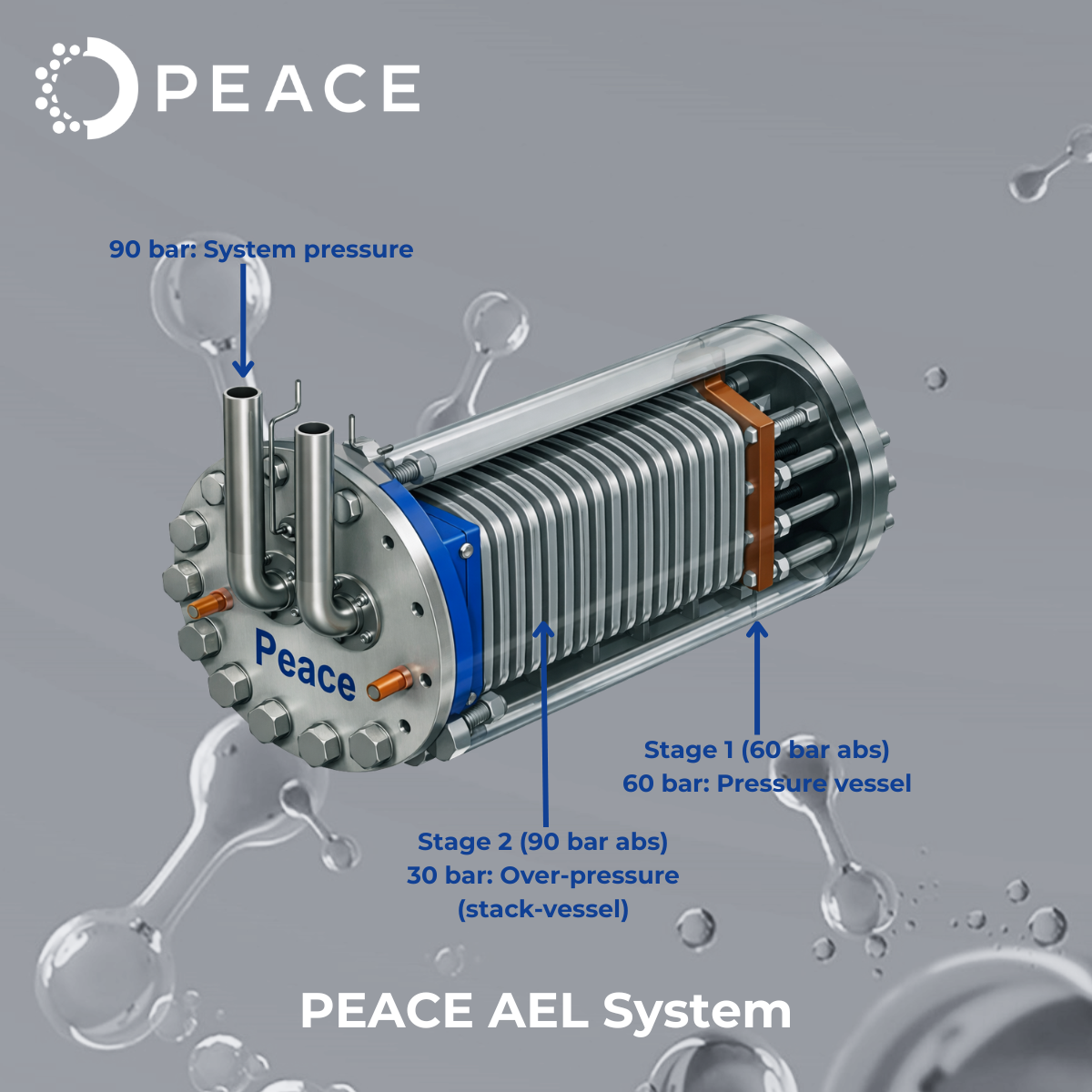
The PEACE dual-pressure concept is designed to produce pressurised hydrogen directly within the electrolysis process, reducing the need for downstream compression and contributing to more efficient and cost-effective hydrogen production.
The project is supported by
the Clean Hydrogen Partnership and its members.
Co-funded by the European Union. Views and opinions expressed are however those of the author(s) only and do not necessarily reflect those of the European Union or Clean Hydrogen Partnership. Neither the European Union nor the granting authority can be held responsible for them.