Life-Cycle Assessment Assessing the environmental performance of high-pressure electrolysis
Published: August 4, 2026
The PEACE project is developing a high-pressure alkaline electrolysis (AEL) technology based on a novel two-stage pressurisation concept. The aim is to reduce hydrogen production costs and enhance the competitiveness of the hydrogen economy.
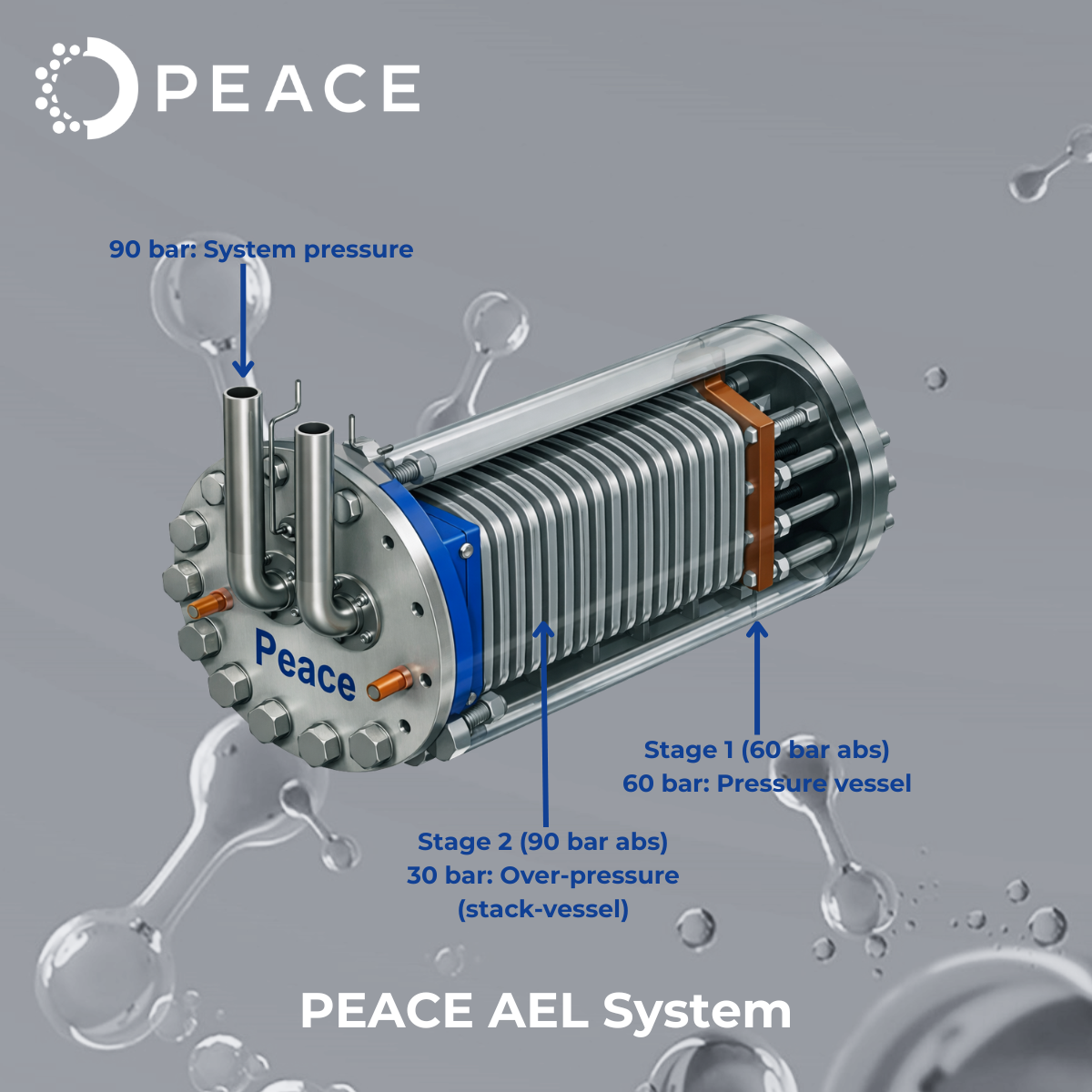
At the same time, it is important to understand the technology’s potential environmental hotspots and identify areas that need to be addressed to ensure its long-term sustainability and circularity. To identify these, a Life-Cycle Assessment (LCA) of the PEACE technology is being conducted to quantify its environmental impacts throughout its life cycle.
Why does LCA matter?
Life-Cycle Assessment is a methodology used to evaluate the environmental impacts of a product, technology or process throughout its entire life cycle: from construction and operation to maintenance and end-of-life.
For an alkaline electrolyser, this means looking beyond its performance during operation. The assessment considers elements such as cells and stacks, balance of plant, power electronics, electricity, water and electrolyte consumption, as well as processes at the end of the system’s lifetime.
LCA is important because it helps identify where the main environmental impacts occur and where improvements can have the greatest effect. It provides an evidence-based approach to assessing the sustainability of technologies and can support informed decisions about their future development and industrial deployment.
Comparing high-pressure and conventional AEL
Within the PEACE project, a detailed life-cycle inventory (LCI) is being developed for a full-scale plant. An LCI is a detailed account of the materials, energy, water and other inputs consumed, as well as emissions and waste generated, throughout a technology’s life cycle.
The LCA is designed to compare the PEACE concept, considering 90-bar hydrogen production, with conventional alkaline water electrolysis systems producing hydrogen at 1 and 30 bar. As hydrogen produced at these lower pressures would require additional compression to reach 90 bar, the comparison takes this additional process into account.
To ensure a fair and meaningful comparison, the assessment uses harmonised system boundaries, functional units and modelling assumptions across the different technology pathways. The analysis considers five electricity supply scenarios and 16 environmental impact categories, providing a comprehensive picture of the potential environmental performance of the technologies.
The LCA methodology follows the principles of the internationally recognised ISO 14040 and ISO 14044 standards, which provide a framework for conducting and reporting life-cycle assessments.
From data to environmental insights
The LCA work brings together data from across the PEACE project, complemented by literature, engineering calculations and appropriate life-cycle inventory databases. The work is led by Technical University of Denmark (DTU) in cooperation with The Hydrogen Chemistry Company (HyCC), German Aerospace Center (DLR) and Brandenburg University of Technology (BTU), combining expertise in environmental assessment, alkaline electrolysis and plant engineering.
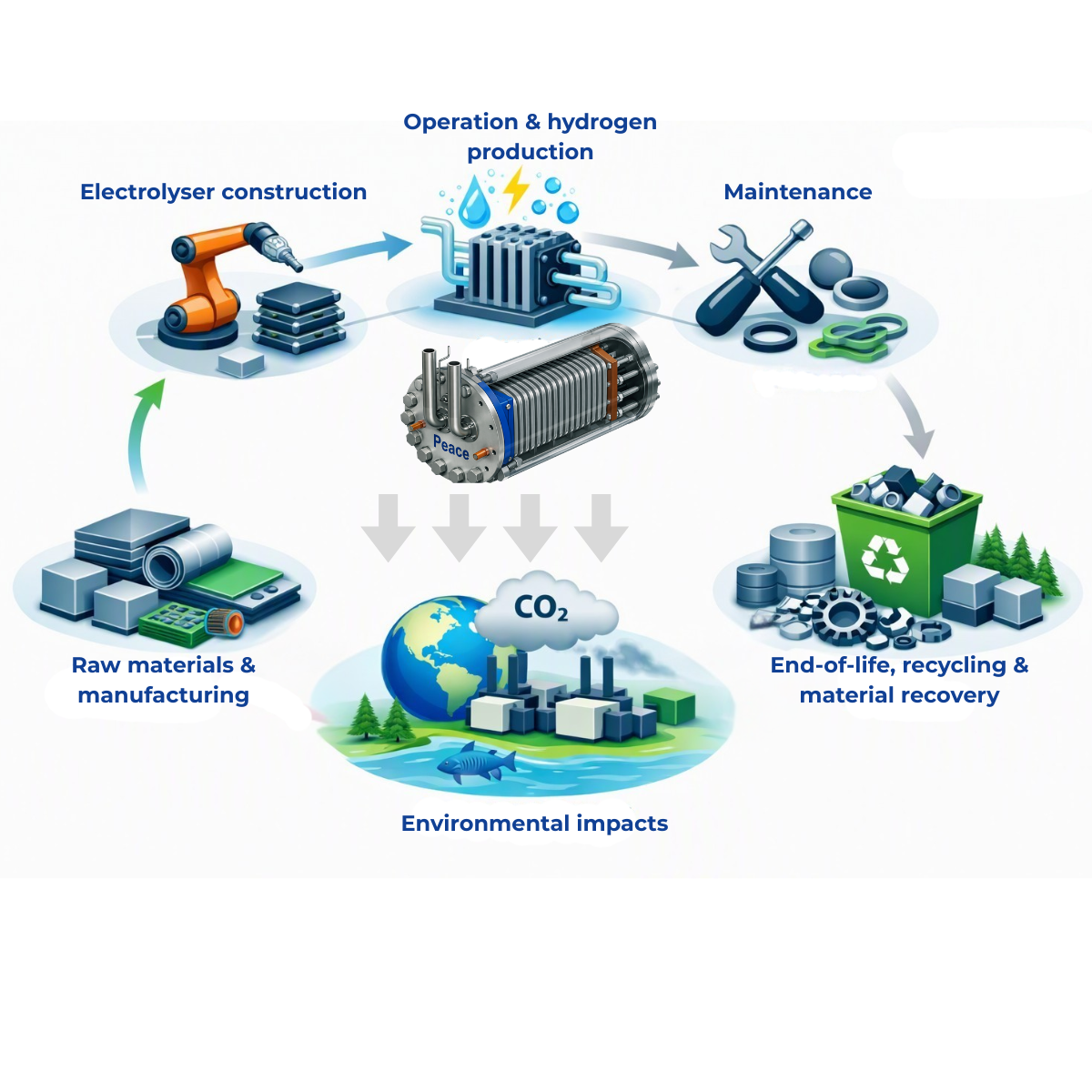
The completed LCA will provide a robust basis for understanding the environmental performance of high-pressure alkaline electrolysis and identifying opportunities for further optimisation.
The results of the PEACE LCA will follow soon. Stay tuned!
The project is supported by
the Clean Hydrogen Partnership and its members.

Co-funded by the European Union. Views and opinions expressed are however those of the author(s) only and do not necessarily reflect those of the European Union or Clean Hydrogen Partnership. Neither the European Union nor the granting authority can be held responsible for them.