7th PEACE PROJECT MEETING
Published: October 9, 2026
At the end of September 2026, the PEACE project met online for its 7th all-hands meeting to review progress and plan the final steps towards delivering its innovative high-pressure alkaline electrolysis technology.
The meeting was opened by the Coordinator, Dr. Fatemeh Razmjooei from the Institute of Engineering Thermodynamics at German Aerospace Center (DLR), who summarised the project’s main achievements and outlined the targets ahead. To date, PEACE has delivered 23 research reports to the Clean Hydrogen Partnership, the project’s granting authority.
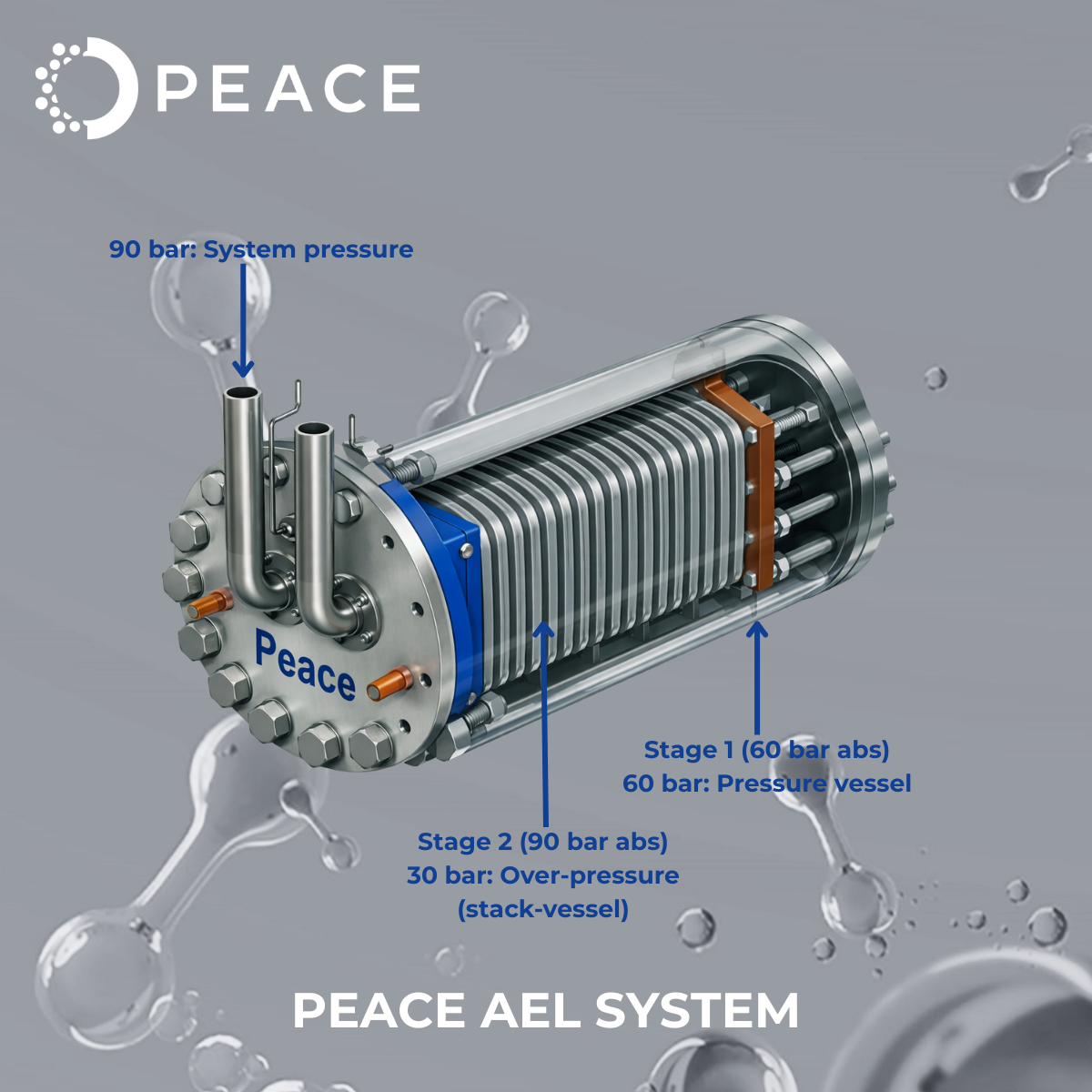
The project is currently focusing on the installation of the PEACE technology demonstrator: a 50 kW alkaline electrolysis system capable of operating at pressures above 50 bar. Its operation and testing are expected to follow shortly.
Technical progress across the project
The PEACE team has achieved its target of reaching a performance of 1 A cm⁻² below 1.8 V with a large 100 cm² cell under pressurised conditions. Currently, colleagues from Eindhoven University of Technology (TU/e) are focusing on identifying the optimal gap size between the membrane and electrodes, while studying gas accumulation behaviour to reduce ohmic resistance. The DLR team is continuing the testing campaign to support the validation of the PEACE model.
Materials Mates Italia (MMI) presented the PEACE 15-cell alkaline electrolysis demonstrator stack and its first test results before its shipment to the Brandenburg University of Technology Cottbus - Senftenberg (BTU).
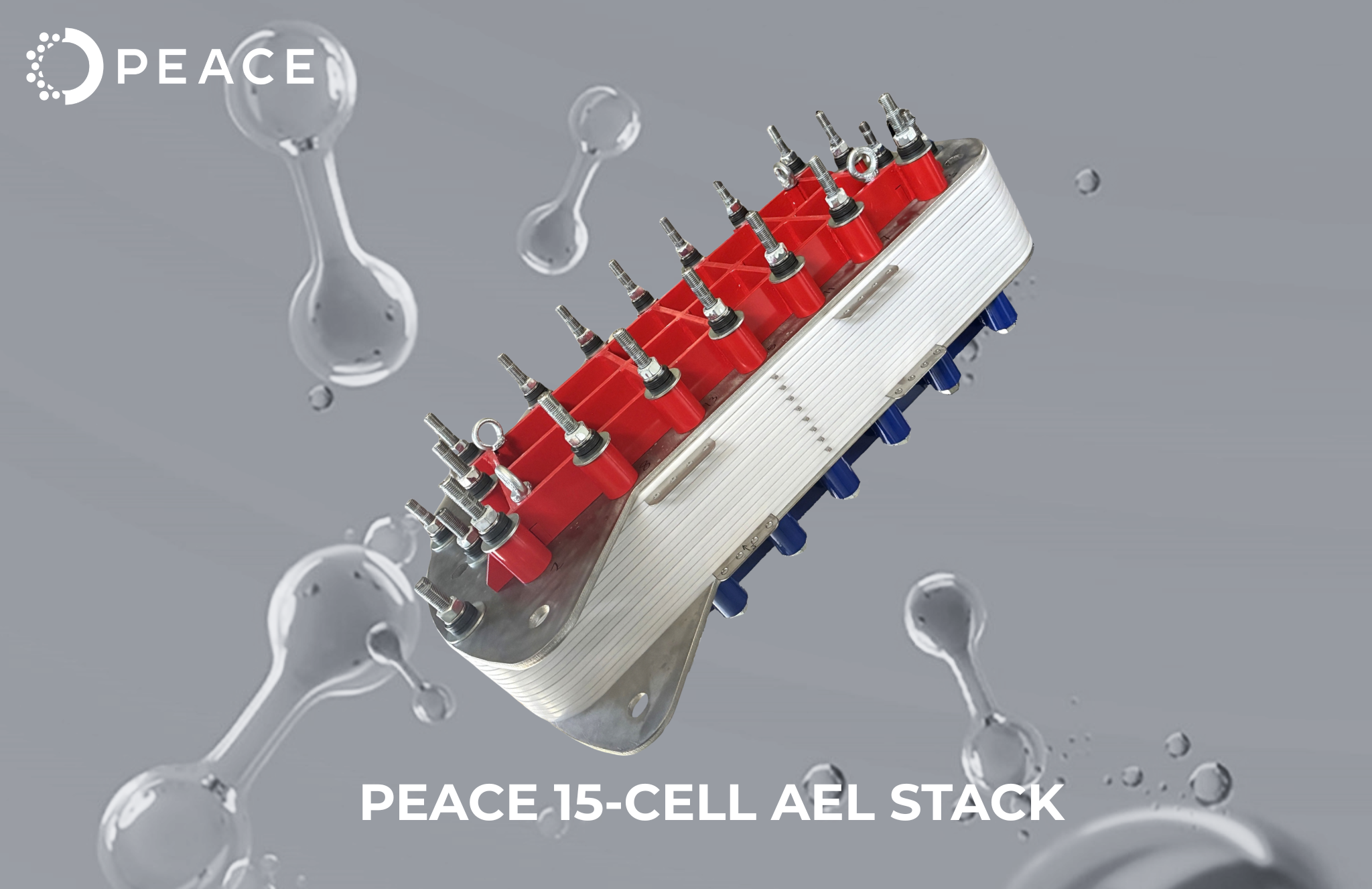
The BTU hydrogen-testing site, including the pressure vessel, is now fully ready to host the stack, with the necessary modifications and extensions to its Balance of the Plant (BoP) successfully completed.
The DLR team also presented updates from the TEMPEST modelling framework, with transient simulations performed to analyse gas purity, temperature dynamics and critical operational boundaries during pressurised operation. The PEACE validation model is expected to be ready soon.
Towards industrial integration
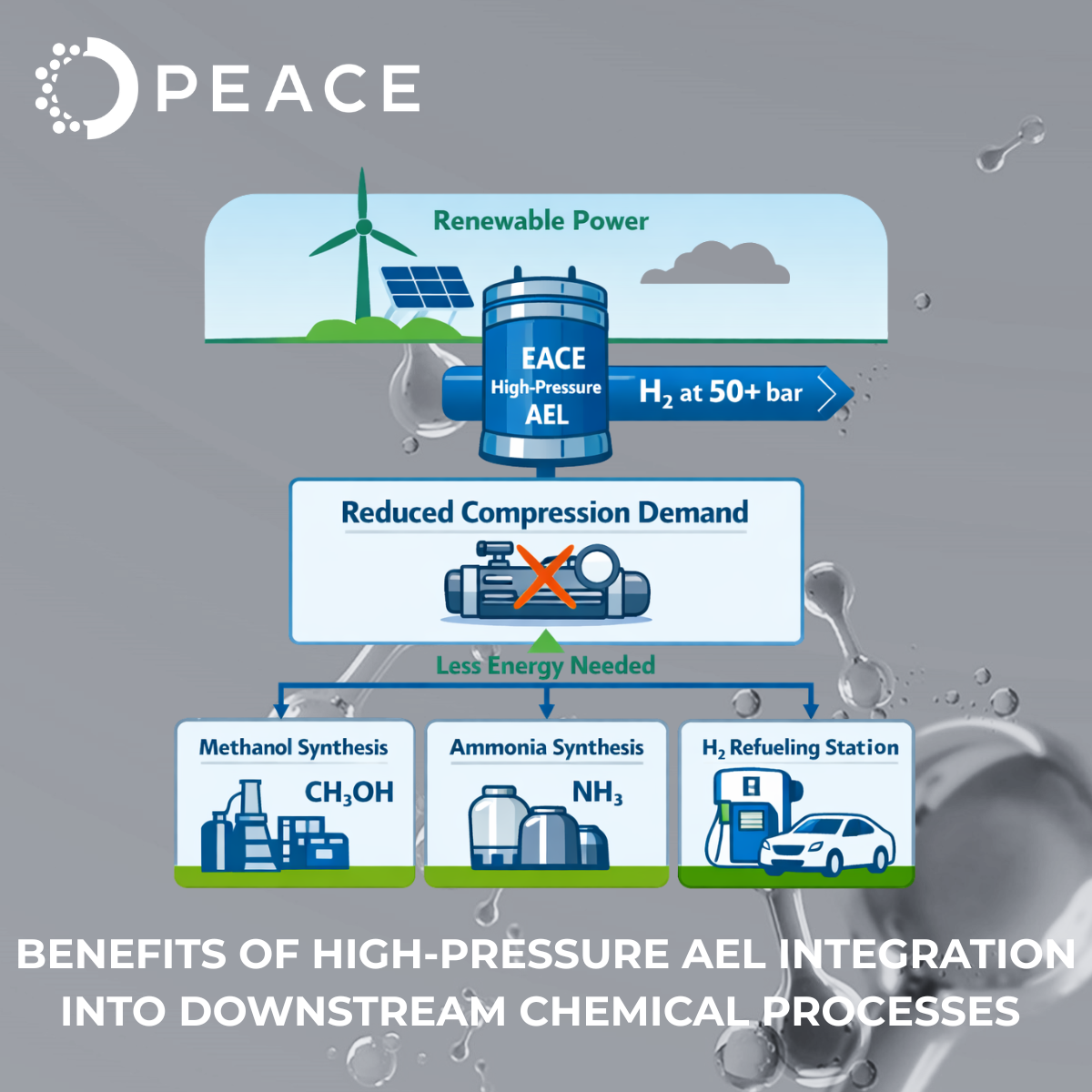
DLR presented results on the efficiency of high-pressure alkaline electrolysis integration into downstream chemcial production chains, including methanol synthesis, ammonia synthesis and hydrogen refuelling stations. Process simulations using ASPEN Plus were carried out to assess the potential benefits of supplying hydrogen directly at elevated pressures.
One of the key findings is that PEACE high-pressure alkaline electrolysis technology can reduce the energy required for subsequent processing steps while maintaining compatibility with industrial applications that require pressurised hydrogen streams.
This dispatch modelling framework also provided valuable inputs for the recently finalised life-cycle assessment (LCA) of the PEACE technology, including valuable AEL inventories, as presented by the Technical University of Denmark (DTU).
The PEACE LCA showed that the potential benefits of direct high-pressure hydrogen production are also reflected in the environmental impacts of the technology. The PEACE concept has around 9–10% lower climate-change impact than the 1-bar reference and around 3–4% lower than the 30-bar reference, mainly by avoiding downstream compression.
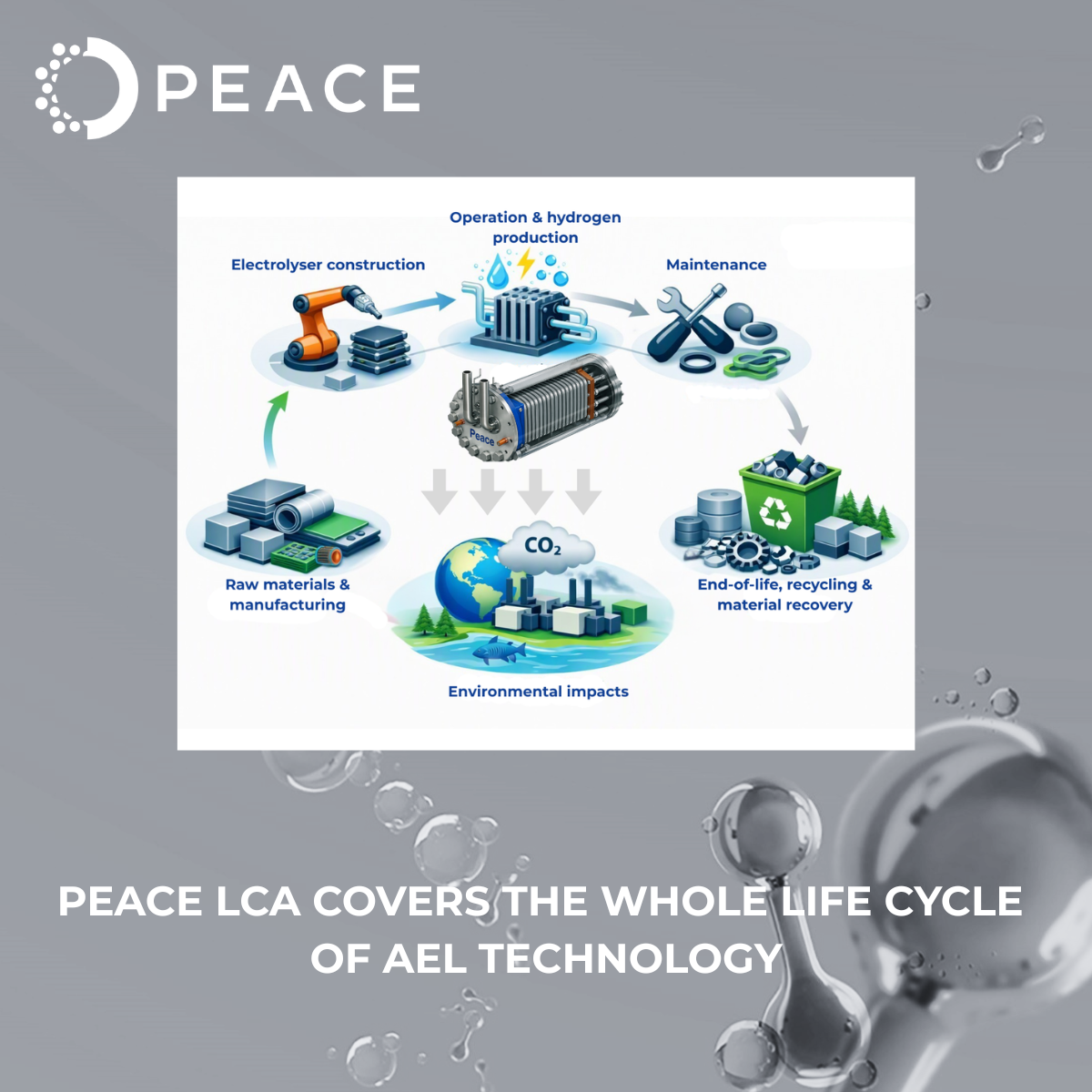
A key message from the LCA is that the source of electricity supplying the alkaline electrolysis process is crucial in determining the climate-change impact of hydrogen production. Efficient electrolysis technologies therefore need to be combined with low-carbon electricity sources to maximise their environmental benefits.
Sharing results and cooperation
Finally, GRANT Garant organised a dedicated networking session between PEACE and the EXSOTHyC project (see more in the upcoming article HERE). The session provided an opportunity to exchange knowledge, research results and perspectives relevant to the development of the European hydrogen ecosystem.
This next-to-last project meeting underscored the substantial progress achieved by the PEACE consortium and helped define the final actions needed to reach the project´s goals. With the demonstrator moving towards installation and testing, the project is entering its final phase of delivering and validating innovative high-pressure alkaline electrolysis solutions for more efficient and sustainable hydrogen production.
The project is supported by
the Clean Hydrogen Partnership and its members.

Co-funded by the European Union. Views and opinions expressed are however those of the author(s) only and do not necessarily reflect those of the European Union or Clean Hydrogen Partnership. Neither the European Union nor the granting authority can be held responsible for them.