6th PEACE Project Meeting: A Short-Stack Closer to the Demonstrator
Published: April 17, 2026
The PEACE project held its sixth all-hands meeting, kindly hosted by the Brandenburg University of Technology Cottbus - Senftenberg (BTU). The consortium gathered to discuss its latest achievements in advancing highly pressurised alkaline electrolysis (AEL) technology.
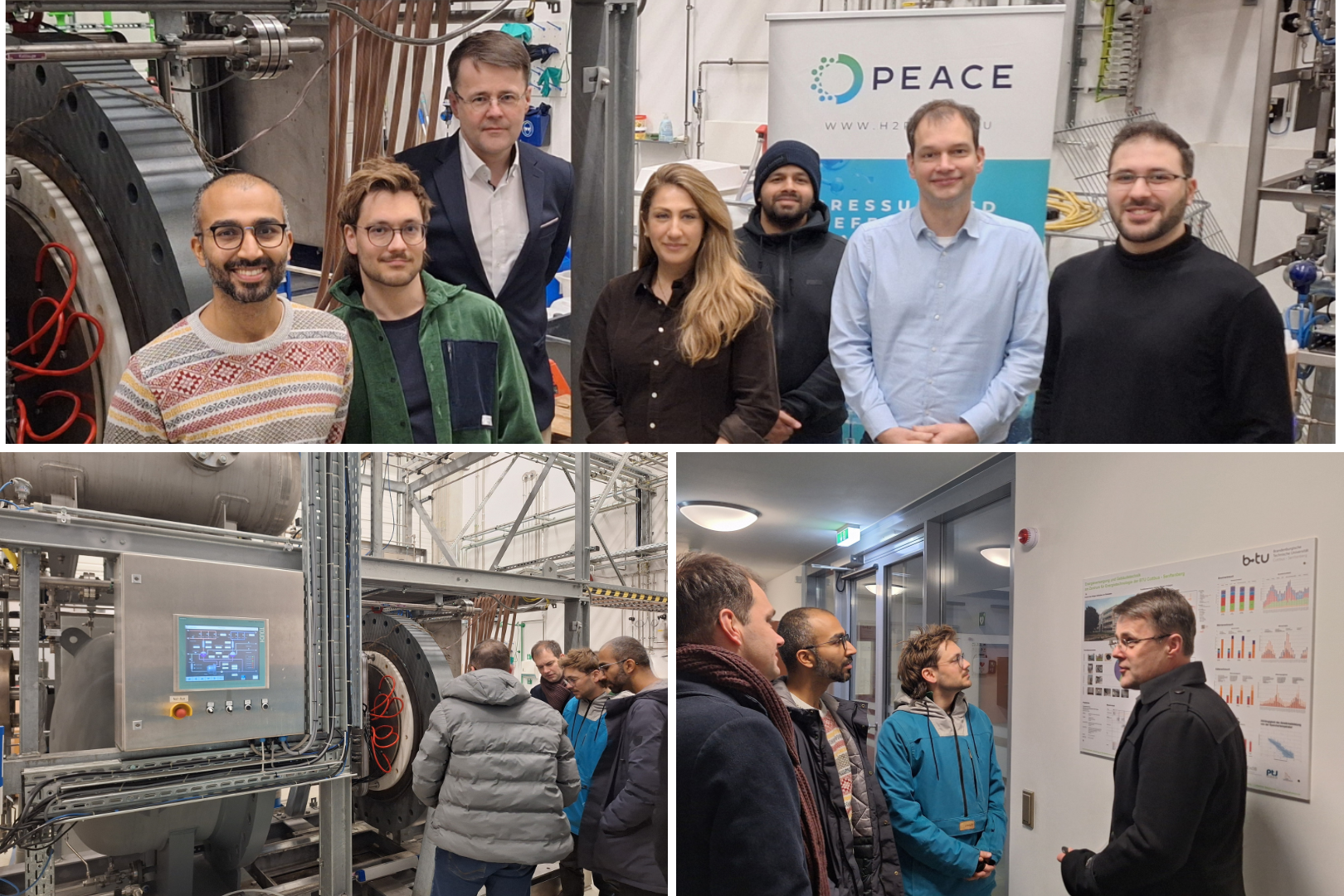
PEACE project team at the BTU campus: Center for Energy Technology
The meeting was opened by the Coordinator, Dr. Fatemeh Razmjooei from the Institute of Engineering Thermodynamics at German Aerospace Center (DLR), who summarised the project’s main achievements and outlined the targets ahead. To date, PEACE has delivered twenty reports to the Clean Hydrogen Partnership, the project’s granting authority.
The project is currently focusing on the finalisation of the short-stack testing phase, which will enable the assembly, testing and operation of the PEACE technology demonstrator — a 50 kW alkaline electrolysis system capable of operating at pressures above 50 bar.
Technical progress across the project
TU/e and DLR teams achieved the goal of reaching a performance of 1 A cm⁻² below 1.8 V with a large 100 cm² unite under pressurised conditions. The latest findings from electrochemical and gas purity testing were presented, and work now continues with further optimisation of cell components.
Materials Mates Italia (MMI) presented the PEACE three-cell short stack, assembled and installed at the BTU testing facility. The first test results were discussed and will support further improvements to the PEACE AEL technology demonstrator currently under development. At the same time, the fifteen-cell PEACE demonstrator stack is under production, alongside the CE-marking procedure and the certification process under the Pressure Equipment Directive (PED 2014/68/EU).
The DLR team also presented updates from the TEMPEST modelling framework, where transient simulations have been performed to analyse gas purity, temperature dynamics and critical operational boundaries during pressurised operation.
Towards industrial integration
HyCC with support of DLR shared their progress in integrating the PEACE high-pressure AEL system into industrial settings with downstream processes. The design models are coupled with renewable energy sources (RES) to simulate how the PEACE technology operates in the production of green hydrogen.
This dispatch modelling framework also provides valuable input for the life-cycle assessment (LCA) of the PEACE technology, enabling the quantification of its environmental impacts. A comprehensive life-cycle inventory dataset for the PEACE high-pressure AEL technology — together with reference data — is currently being finalised by the Technical University of Denmark (DTU). The final impact analysis, including a strong comparative interpretation, is ongoing.
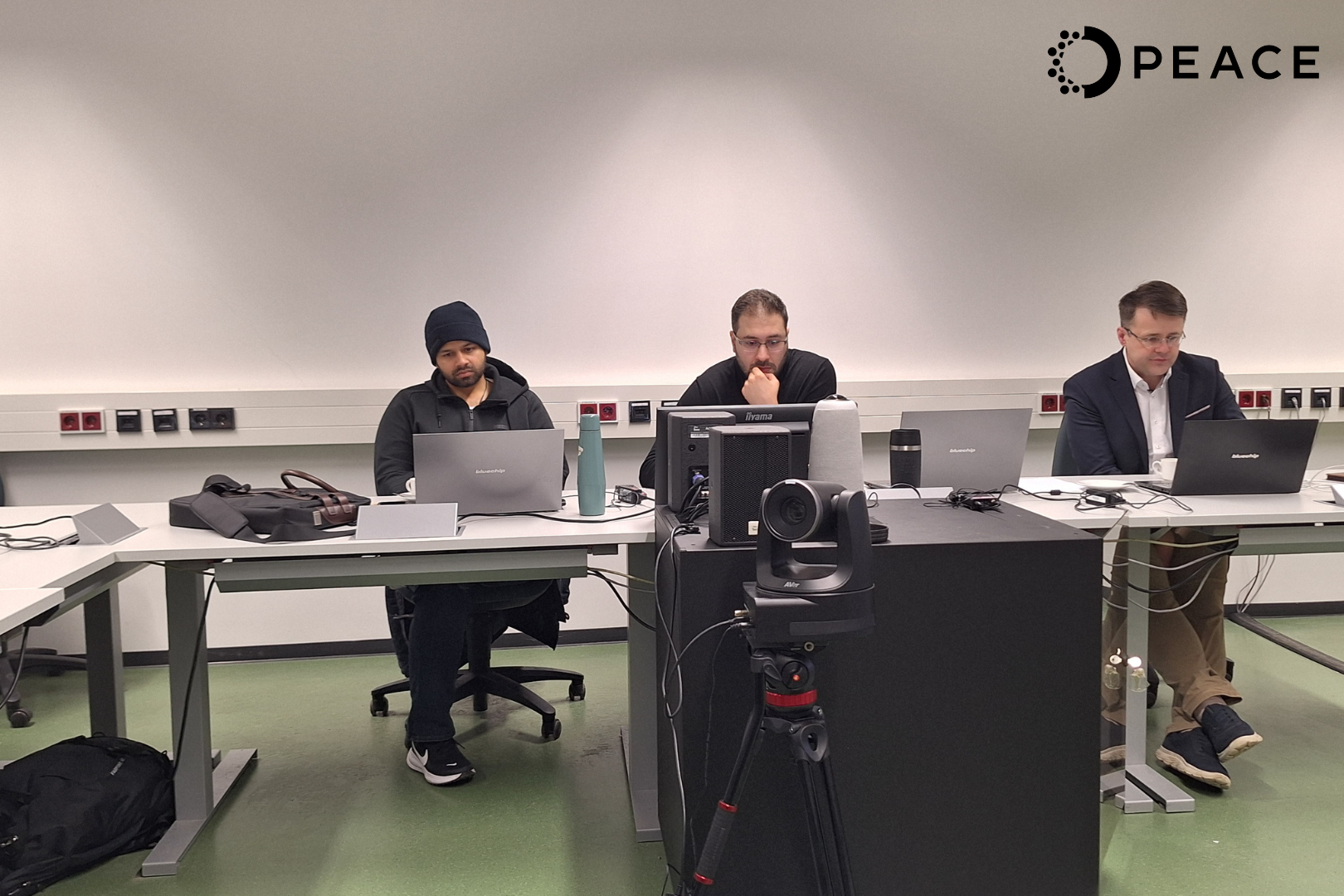
BTU team
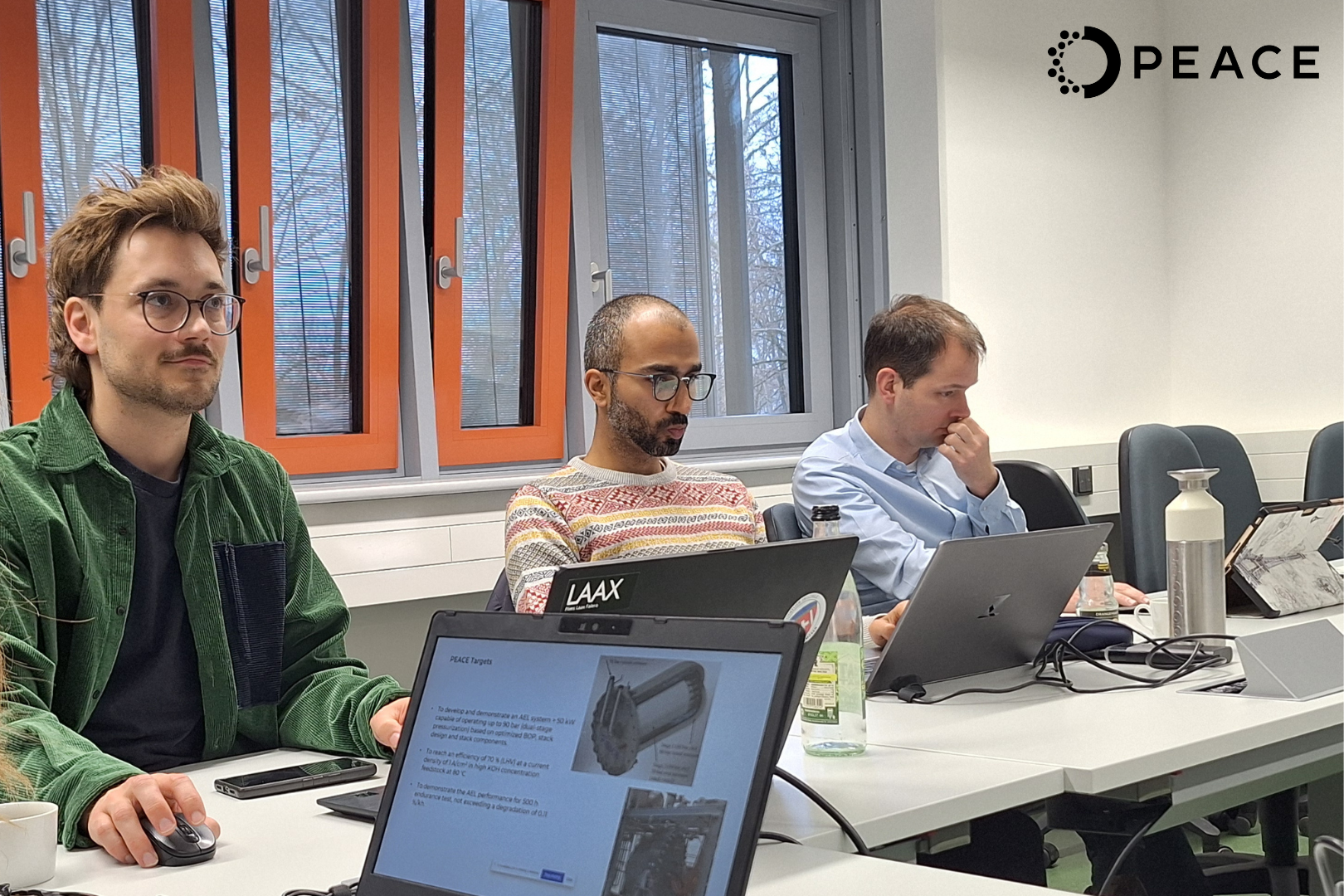
DLR and TU/e teams
Sharing results and Celebrating progress
GRANT Garant presented the latest key performance indicators of the PEACE communication and dissemination strategy, covering PEACE scientific publications and activities on the project website, X and LinkedIn channels. Updates were also shared on data management and the exploitation of results to maximise the project’s impact.
The meeting was further enriched by a dedicated networking session with the CLEANHYPRO project – see more HERE.
Short-stack visit
A highlight for the consortium was the visit to the BTU hydrogen testing site, where the PEACE short-stack is installed - a tangible result of more than two years of intensive collaboration and experimental work across the consortium laboratories.
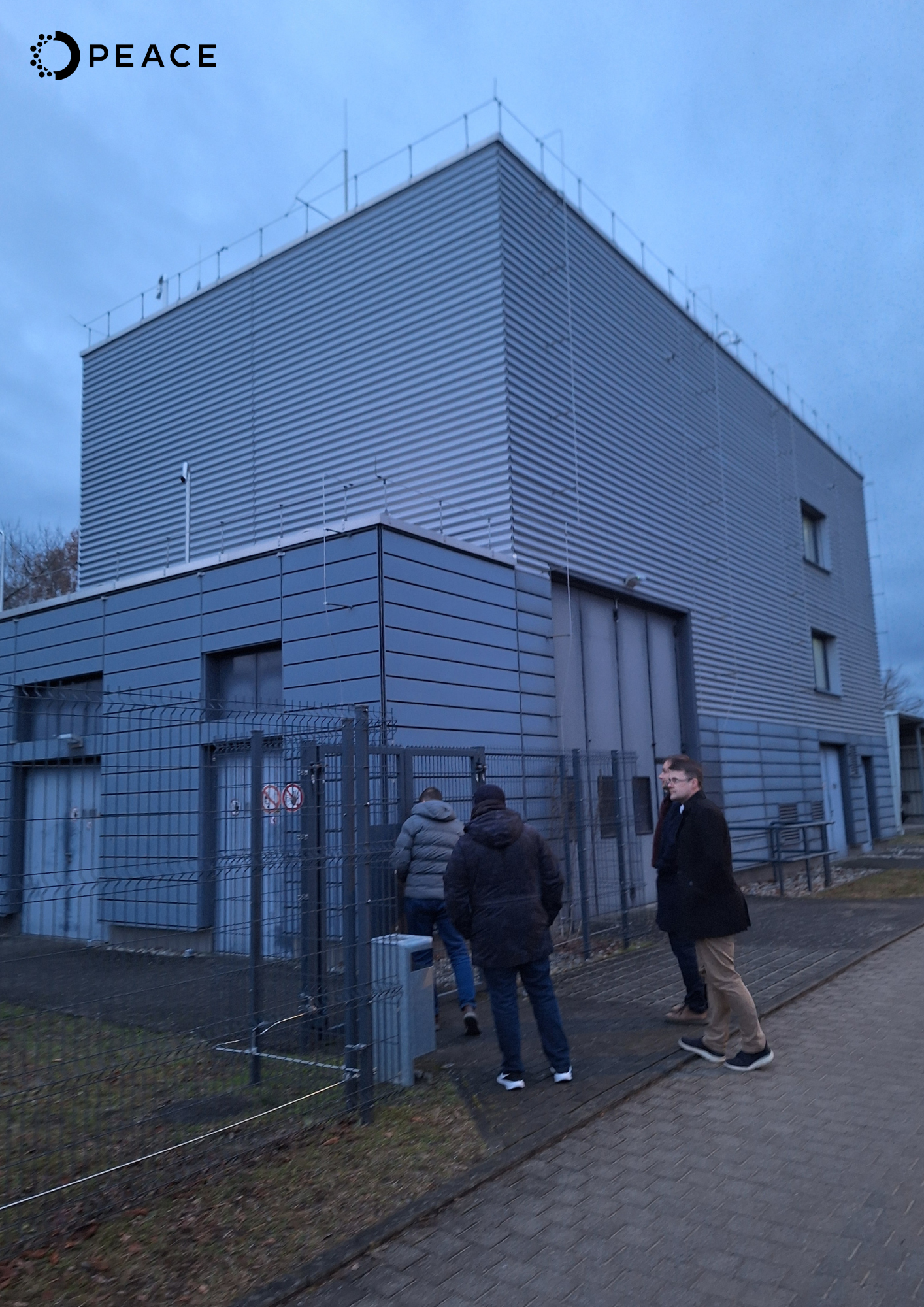
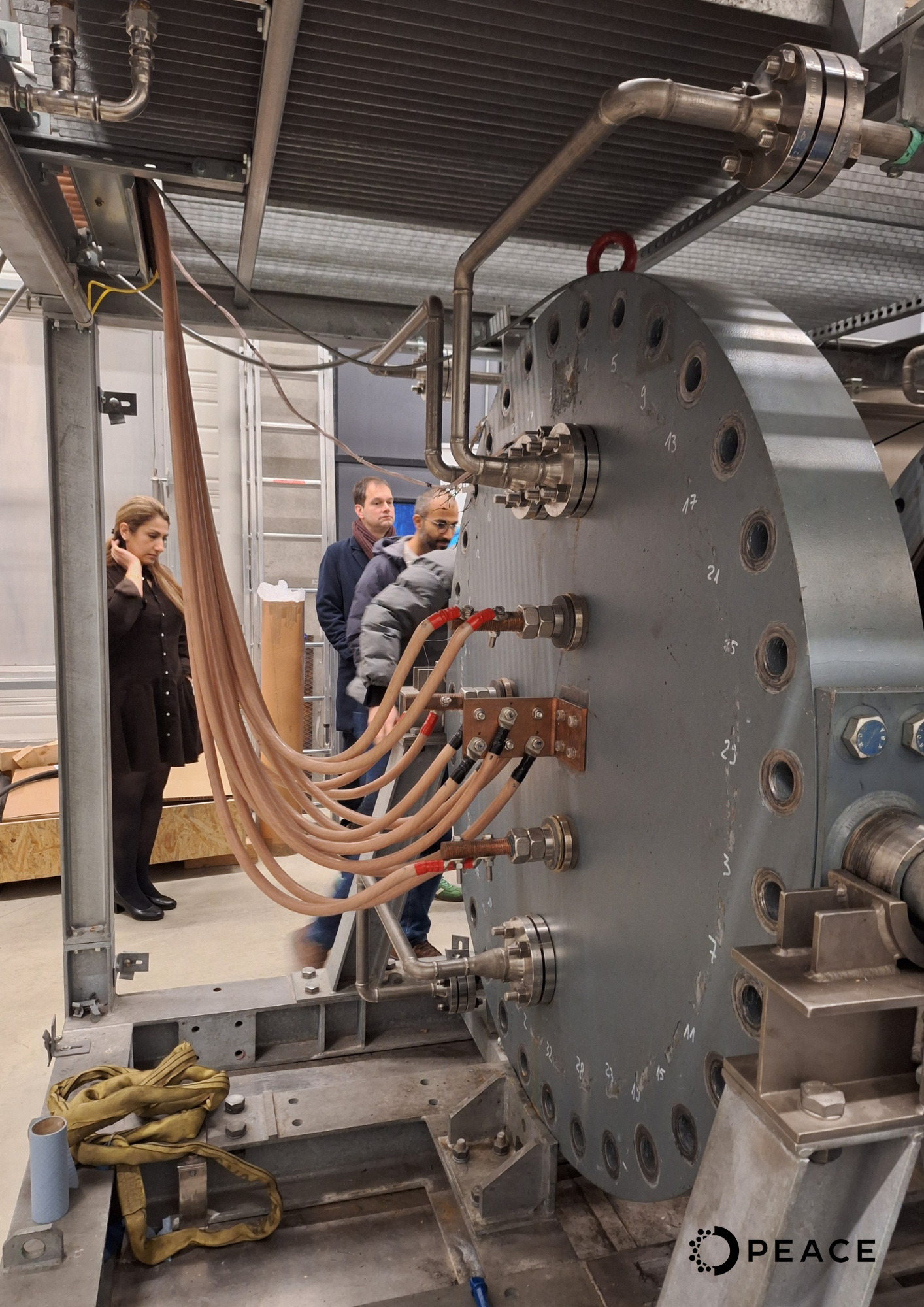
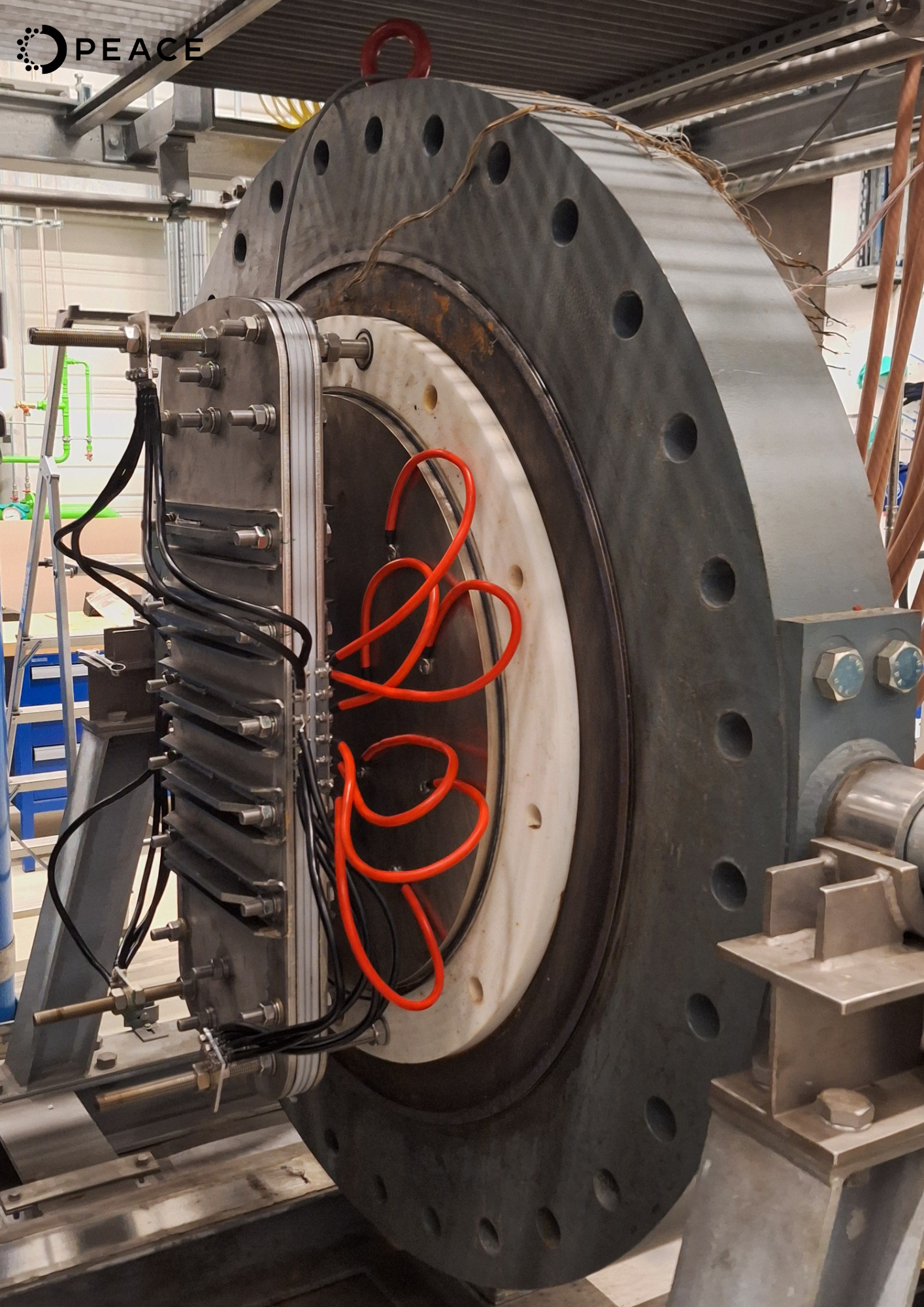
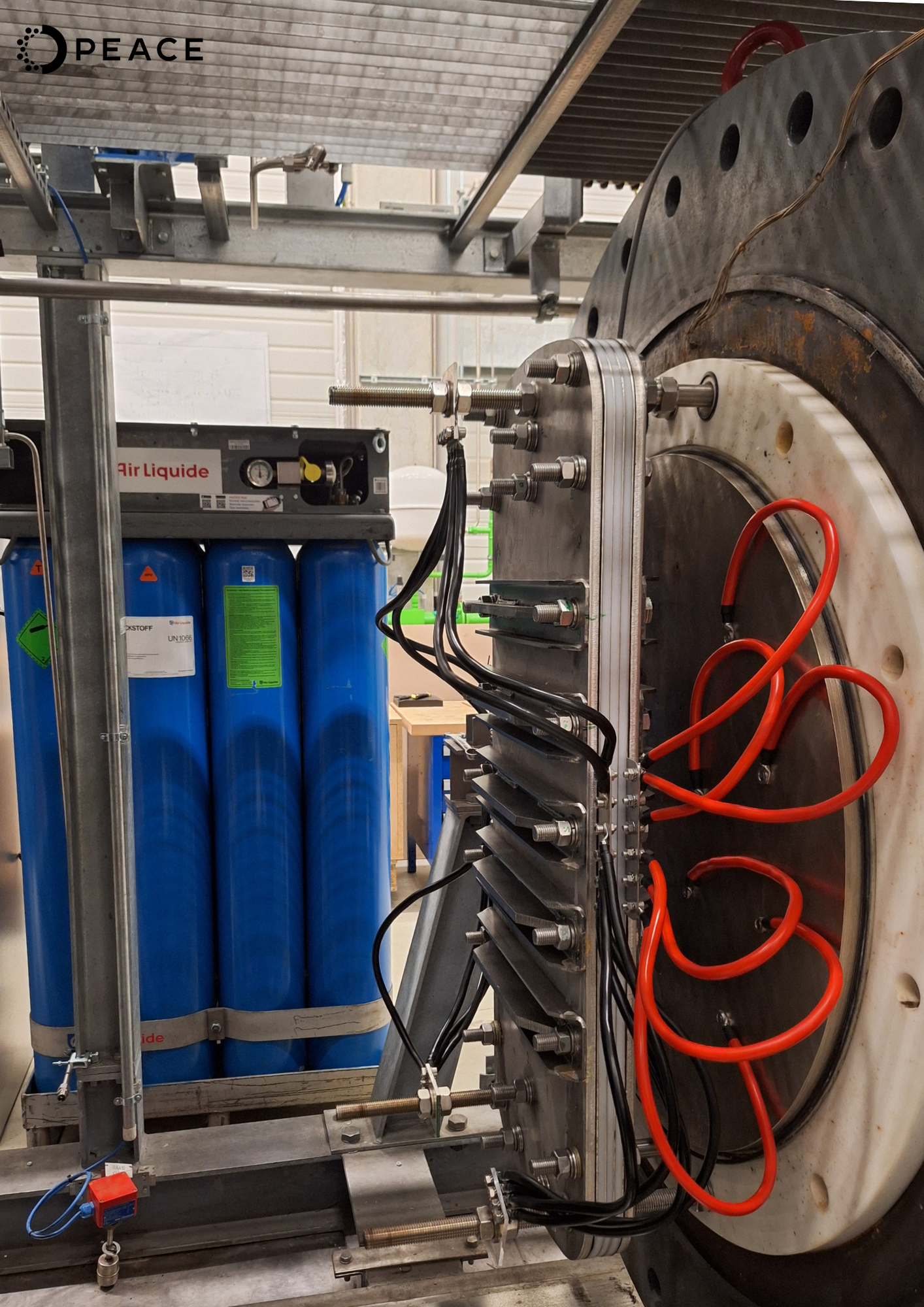
BTU test site with the PEACE short stack
The meeting in Cottbus underscored the substantial progress achieved by the PEACE consortium and reflected the team’s commitment to delivering innovative high-pressure alkaline electrolysis solutions that support Europe’s transition to sustainable hydrogen production.
Discover more PEACE project results HERE
The project is supported by
the Clean Hydrogen Partnership and its members.
Co-funded by the European Union. Views and opinions expressed are however those of the author(s) only and do not necessarily reflect those of the European Union or Clean Hydrogen Partnership. Neither the European Union nor the granting authority can be held responsible for them.